CHIMNEY FLASHING
Where the Roof Ends and the Trouble Begins.
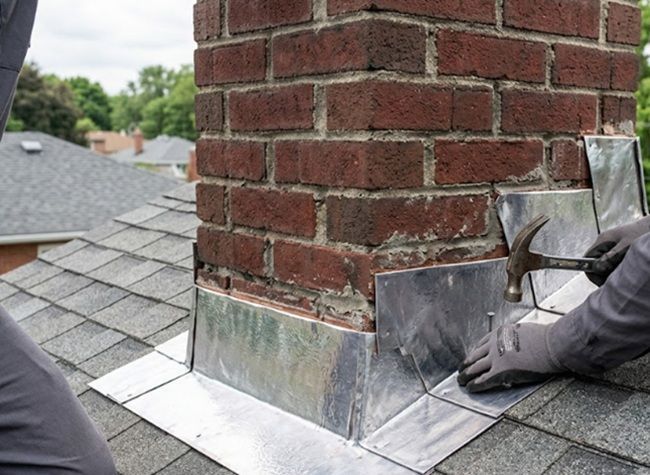
Chimney flashing is the metal, typically aluminum, galvanized steel, or copper, installed where the chimney meets the roof. Its job is simple: keep water from entering at that joint. The execution is less simple. Flashing has to flex with the movement between the chimney and the roof, seal against the masonry, and lie flat against the shingles — all while enduring years of heat, cold, and wet weather.
When it fails, water follows the path of least resistance straight into the home. Ceilings stain, rafters rot, insulation molds.
Ace Chimney, Fireplace & Outdoor Living has diagnosed and repaired chimney flashing failures across Louisville, Lexington and the surrounding region for nearly half a century. Our CSIA-certified technicians know the difference between flashing that needs resealing and flashing that needs full replacement. They will not recommend one when the other will do. We serve Louisville, Lexington, Oldham, Shelby, Spencer, Bullitt, Nelson, Hardin, Anderson, Woodford, and Franklin counties, plus Georgetown, Frankfort and every hill and holler in between.
An annual chimney inspection catches failing flashing before it becomes a roofing and interior repair. Family owned since 1978, Ace has earned Kentucky's trust one honest assessment at a time.
The estimate is always free.
Questions About Chimney Flashing? We Are Here to Help.
What is chimney flashing and why does it matter?
Chimney flashing is a system of metal pieces — base flashing, counter flashing and step flashing — that seal the gap between the chimney and the roof surface. Because chimneys and roofs expand and contract at different rates, that joint is always in motion. Properly installed flashing accommodates that movement while maintaining a watertight seal. When it fails, the junction becomes an open channel for water into the home's structure. It's one of the most common sources of chimney-related water damage.
How do I know if my chimney flashing is failing?
Water stains on ceilings or walls near the fireplace are the most obvious sign, but by the time those appear, damage is already underway. Other indicators include visible rust on the flashing, gaps between the flashing and the chimney or roof, lifting metal edges and deteriorated caulk or sealant. A professional inspection is the reliable way to catch flashing problems early. Ace Chimney, Fireplace & Outdoor Living provides free estimates across the Louisville and Lexington areas — a quick look now is cheaper than a ceiling repair later.
Can chimney flashing be repaired, or does it always need replacement?
Not always replacement. If the flashing itself is structurally sound but the sealant has dried and cracked, resealing is often sufficient. If the metal has corroded, lifted away from the masonry or was improperly installed to begin with, replacement is the right call. A technician who tells you every job needs full replacement isn't doing you any favors. Ace assesses each situation on its own terms and recommends only what the flashing actually requires.
What materials are used for chimney flashing?
Aluminum is the most common — cost-effective and corrosion-resistant for most applications. Galvanized steel is durable but can rust over time, particularly in wet climates. Copper is the premium option: long-lasting, visually distinctive and often specified for historic or high-end homes. The right material depends on the roof type, chimney construction and budget. Kentucky's climate doesn't demand copper, but it rewards quality installation regardless of material.
How long does chimney flashing last?
With quality materials and proper installation, chimney flashing can last 30 years or more. Aluminum and copper hold up well; galvanized steel varies depending on coating quality and exposure. Poor installation shortens the lifespan of any material — flashing that wasn't properly embedded in the mortar joints or that lacks counter flashing will fail prematurely regardless of what it's made from. Annual inspections keep small sealant issues from turning into full replacements ahead of schedule.