CHIMNEY CROWNS
Water Doesn't Wait for a Convenient Time
to Find a Crack.
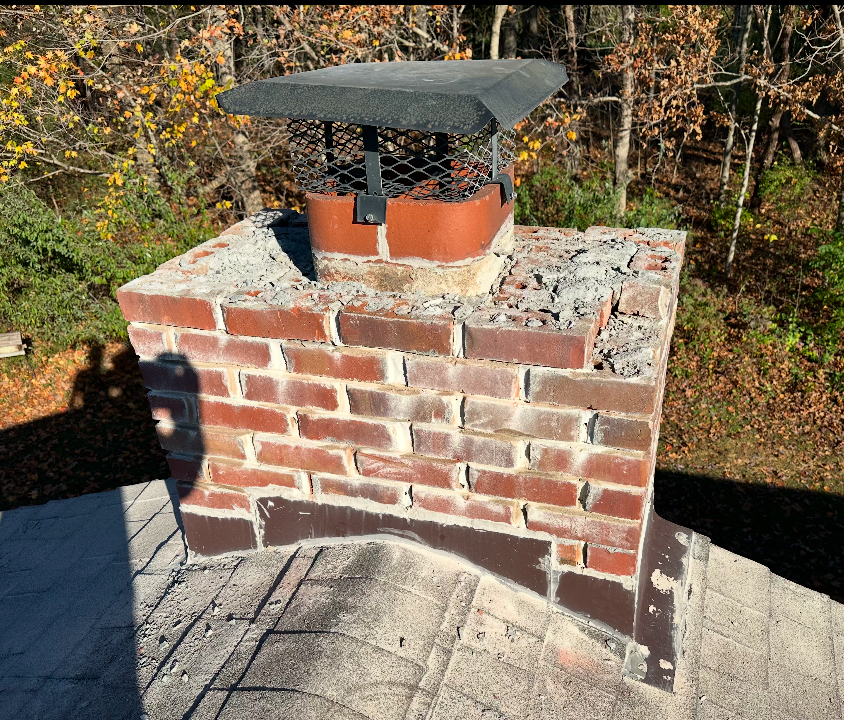
The chimney crown is the concrete or mortar cap that seals the top of a masonry chimney. It slopes away from the flue to shed water, protecting the brick and mortar below from the freeze-thaw cycles that Kentucky winters deliver. Most homeowners never think about it until a crack appears. Water starts showing up inside or chunks of mortar begin falling into the firebox.
By the time damage is visible, it's usually been working against you for a season or two.
Ace Chimney, Fireplace & Outdoor Living has served Louisville, Lexington, and the surrounding counties since 1978. Our CSIA-certified technicians inspect, repair, and replace chimney crowns across Jefferson, Oldham, Shelby, Spencer, Bullitt, Nelson, Hardin, Anderson, Woodford, and Franklin counties. A compromised crown doesn't fix itself. Water finds every crack, expands when it freezes and widens what was a hairline into a structural problem.
The repair is straightforward when caught early. A full replacement costs more and takes longer, but either way, Ace has done it thousands of times across Kentucky. Family-owned since 1978, we built our reputation on showing up, doing the work right, and standing behind it.
If your chimney crown hasn't been inspected recently, that's reason enough to schedule one. The estimate is free.
Have Questions about Chimney Crowns? We Have Answers.
What is a chimney crown and what does it do?
The chimney crown is the concrete or mortar surface that covers the top of a masonry chimney, surrounding the flue opening and sloping outward to direct water away from the structure. It acts as the chimney's first line of defense against rain, snow and ice. Without a sound crown, water penetrates the masonry and begins breaking it down from the top. Most chimney crowns are poured concrete, though older homes sometimes have mortar-only crowns that deteriorate faster. Either way, the job is the same — keep water out.
How do I know if my chimney crown is damaged?
Cracks are the most common sign, but you often can't see them from the ground. Spalling brick near the top of the chimney, water stains on interior walls near the fireplace or water in the firebox after rain all point toward a crown that's failing. A CSIA-certified technician can assess the crown up close and tell you exactly what you're dealing with. Ace Chimney, Fireplace & Outdoor Living offers free estimates across the Louisville and Lexington areas — it costs nothing to know where you stand.
Can a cracked chimney crown be repaired or must it be replaced?
It depends on the extent of the damage. Hairline cracks and minor surface deterioration can often be sealed with a flexible crown coat sealant, extending the life of the crown significantly. Larger cracks, crumbling edges or a crown that has shifted out of position typically require full replacement. A professional inspection tells you which situation you're in. Attempting to patch severe damage without proper assessment usually delays the inevitable and adds cost.
What happens if I ignore a damaged chimney crown?
Water is the primary threat. Once it breaches the crown, it works into the masonry, freezes in winter and expands — widening cracks, loosening mortar and eventually compromising the structural integrity of the chimney. Interior damage follows: stained walls, deteriorating firebox components and in serious cases, water reaching framing inside the home. Crown damage that costs a few hundred dollars to address today can become a multi-thousand-dollar masonry repair if left alone through another Kentucky winter.
How long does a chimney crown last?
A properly poured concrete crown with good slope and clean edges can last 50 years or more. Crowns mixed with too much sand, poured too thin or without proper overhang fail much sooner — sometimes within a decade. Kentucky's climate, with its cycle of warm spells and hard freezes through winter, accelerates deterioration on any crown that isn't built or maintained correctly. Regular inspections, ideally annual, catch small problems before they become large ones.