CHIMNEY CAP REPLACEMENT & REPAIR
One Small Cover.
One Less Thing That Can Go Wrong.
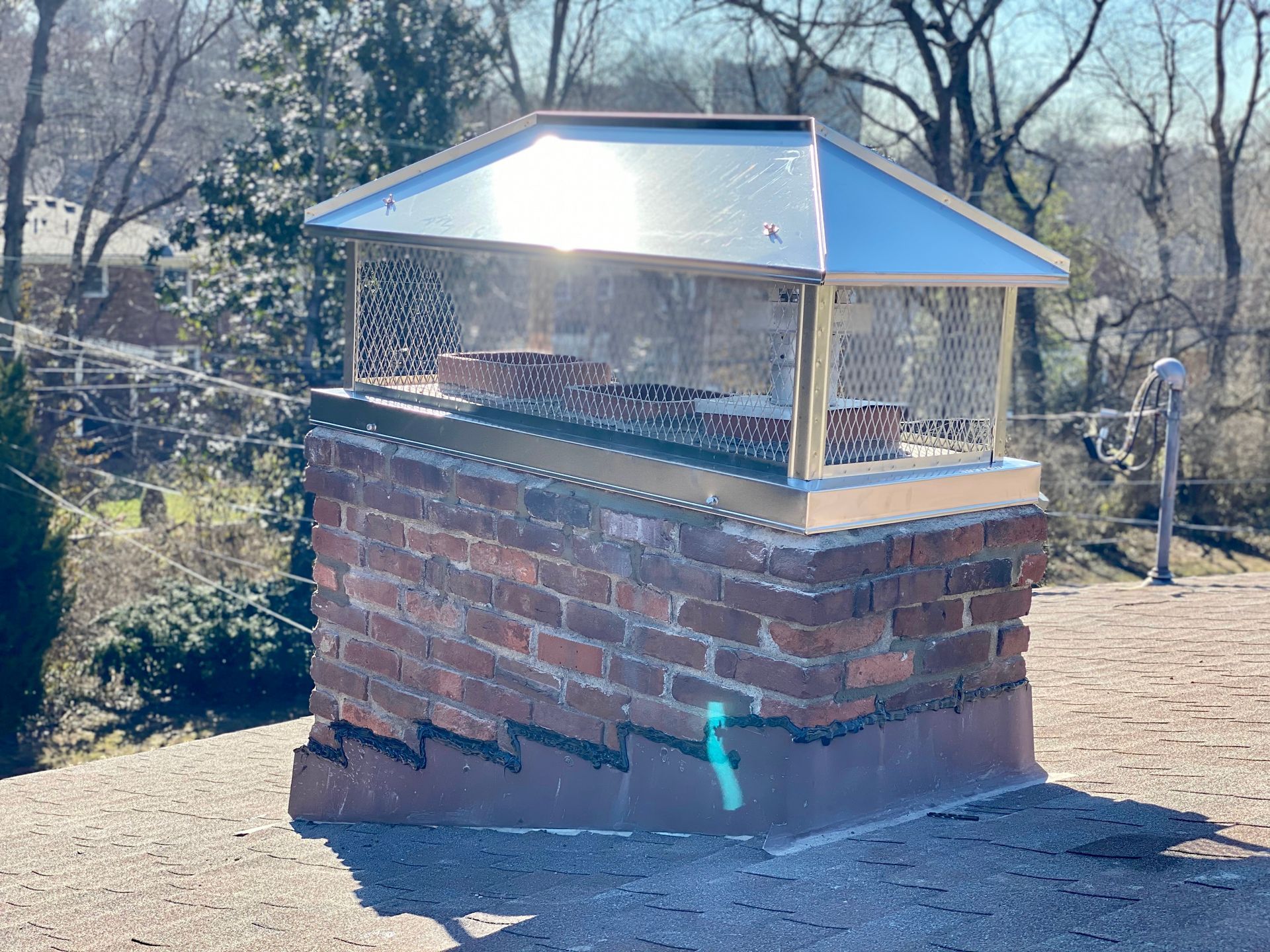
A chimney cap is the metal cover fitted directly over the flue opening at the top of a masonry chimney. It keeps rain out, blocks animals from nesting inside, and stops wind-driven downdrafts from pushing smoke back into the home. In short, it fixes many leaky chimneys. Without a cap, an open flue is an invitation for water that accelerates liner deterioration, for birds and squirrels that build nests and create blockages, and for the kind of moisture damage that compounds until the repair bill arrives.
Ace Chimney, Fireplace & Outdoor Living installs, replaces and repairs chimney caps across Louisville, Lexington and the surrounding region — Jefferson, Oldham, Shelby, Spencer, Bullitt, Nelson, Hardin, Anderson, Woodford and Franklin counties, plus Frankfort, Georgetown and everywhere in between. Our CSIA-certified technicians match cap style and material to the flue dimensions and chimney construction. A cap that doesn't fit correctly doesn't protect correctly.
Stainless steel caps with mesh siding handle most applications and last for decades. Multi-flue caps cover more complex chimney tops in a single unit. The right cap, properly installed, is one of the simplest and most cost-effective things a homeowner can do for a chimney's long-term health. Ace Chimney, Fireplace & Outdoor Living has been making that case across Kentucky since 1978.
The estimate is free.
We're Here to Answer All of Your Chimney Cap Questions.
What does a chimney cap actually do?
A chimney cap covers the flue opening and serves three functions: it blocks rain and snow from entering the flue, it prevents animals from nesting inside and it reduces wind-driven downdrafts that push smoke and odor back into the living space. The mesh sides of a standard cap also act as a spark arrestor, catching embers before they land on the roof or surrounding landscaping. It's a small piece of hardware that does meaningful work year-round, not just when the fireplace is in use.
Ace Chimney, Fireplace & Outdoor Living will send a nationally certified expert to your home to repair or replace your chimney cap.
How do I know if my chimney needs a new cap?
If there's no cap at all, that's the starting point. Beyond that: visible rust or corrosion on an existing cap, mesh that has collapsed or corroded through, a cap that has shifted or lifted off the flue crown, or evidence of animal activity inside the chimney all indicate a cap that isn't doing its job. Water in the firebox after rain — with no other obvious source — often points to a missing or failed cap. Ace Chimney, Fireplace & Outdoor Living offers free estimates across the Louisville and Lexington areas if you're unsure what you're looking at.
What materials are chimney caps made from?
Galvanized steel is the entry-level option — functional but prone to rust over time. Stainless steel is the standard recommendation for most Kentucky homes: corrosion-resistant, durable and available in a range of sizes and styles. Copper caps are the premium choice, developing a natural patina over time and lasting for decades with minimal maintenance. The right material depends on the application and budget. Ace installs all three and will recommend what the job actually calls for, not what costs the most.
Does a chimney cap affect draft or fireplace performance?
A properly sized and installed cap has no negative effect on draft. In many cases it improves it by reducing wind-induced downdrafts. Problems arise from caps that are too small for the flue, caps with mesh that has partially collapsed or caps installed incorrectly over the flue opening. If a fireplace that previously drafted well starts smoking into the room after a cap was added, the cap is likely the wrong size or was installed improperly. Ace Chimney, Fireplace & Outdoor Living sizes caps to the flue and checks draft as needed to ensure your chimney and fireplace operate as they should.
Can animals really get into a chimney without a cap?
They do it regularly. Chimney swifts, starlings and sparrows nest in uncapped flues during spring and summer. Squirrels enter in fall, looking for winter shelter. Raccoons, particularly females in spring, find open flues appealing nesting sites and can be difficult to remove once established. Beyond the nuisance, animal nests create blockages that restrict draft and become fire hazards if nesting material is near the firebox opening. A cap with correctly sized mesh stops them at the top.