CHIMNEY CHASE COVERS
It's the Part Builders Cheap Out On.
And it's the Part We Replace Right.
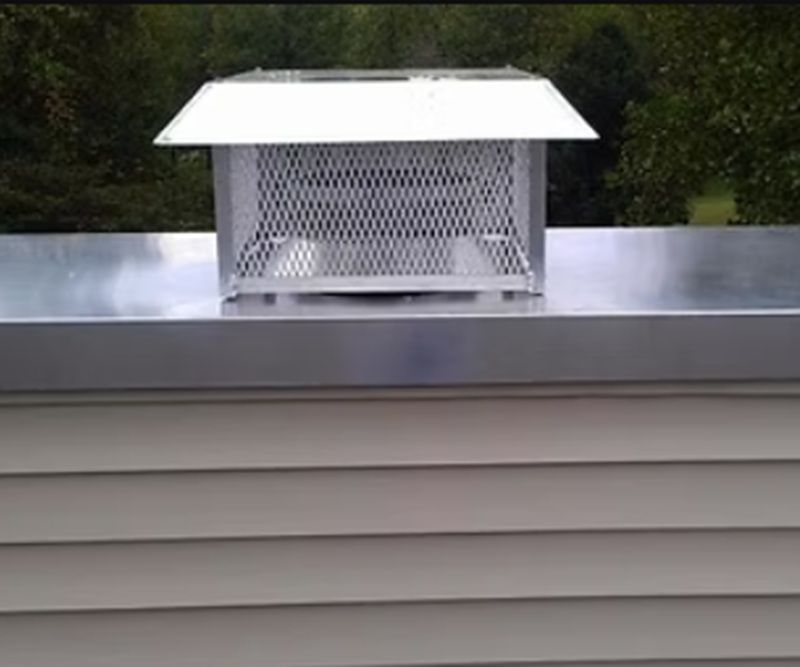
The chimney chase cover is the metal lid that sits atop a prefabricated chimney chase, the framed, exterior box common on homes built with factory-built fireplaces. It covers the entire chase structure, with an opening for the flue pipe, and bears the full brunt of Kentucky weather year-round. Rain, ice, UV exposure and temperature swings constantly wreak havoc.
Most chase covers are installed once and forgotten. That's the problem. The galvanized steel covers that builders typically use are prone to rust, and once rust sets in, water follows into the chase, onto the damper, down through the firebox, and eventually into the home.
Stainless steel and aluminum covers outlast galvanized by a wide margin and come custom-fitted to the chase dimensions. It's a straightforward upgrade that protects everything below it. Family owned since 1978, Ace Chimney, Fireplace & Outdoor Living has been making that case to Kentucky homeowners long before it became common knowledge. The estimate is free.
Have Questions About Chimney Chase Covers? We Can Help.
How is a chimney chase cover different from a chimney cap?
A chimney cap fits over an individual flue opening on a masonry chimney. A chase cover is a larger, flat or pitched metal cover that spans the entire top of a prefabricated chimney chase — the wood-framed box that houses a factory-built fireplace system. The chase cover has one or more openings for the flue pipe to pass through, but it protects the whole structure rather than just the flue. Homes with prefab fireplaces need a chase cover; homes with masonry chimneys need a cap. They're not interchangeable.
How do I know if my chase cover needs replacement?
Rust streaks running down the exterior of the chase are the clearest sign. You may also notice water in the firebox after rain, a musty smell from the fireplace or deterioration of the damper components — all consistent with water getting past a failing cover. From the ground, rust streaks are often visible on the chase siding. A technician with a ladder can assess the cover directly and give you an honest read on whether it needs sealing, patching or full replacement.
How is a chase cover sized and installed?
Chase covers are custom-fabricated to fit the dimensions of the chase opening. A technician measures the chase top, accounts for the flue pipe diameter and orders or fabricates a cover to fit. Installation involves securing the cover to the chase top and, in most cases, sealing the perimeter and flue pipe opening to ensure a watertight fit. It's a half-day job in most cases. Ace Chimney, Fireplace & Outdoor Living handles measurement, fabrication and installation as needed to get the job done properly.
Can a rusted chase cover damage the inside of my chimney?
Yes, and it often does before homeowners realize the cover is the source. Water entering through a deteriorated cover collects in the chase, accelerating rust on the damper, degrading the firebox panels and in some cases reaching the framing inside the wall. Prefab fireplace components — dampers, panels, gaskets — are not cheap to replace. A new chase cover is a fraction of the cost of addressing the damage a failed one causes over a few seasons.
Why do builder-grade chase covers fail so quickly?
Most production builders install galvanized steel covers that are inexpensive and functional at first, but prone to rust within a few years of exposure. Galvanized steel holds up reasonably well in dry climates. Kentucky, with its humidity, seasonal rain and freeze-thaw winters, accelerates the decay process. Once the galvanized coating is compromised, rust spreads quickly. Stainless steel and aluminum covers cost more upfront and last significantly longer, often for the life of the home. Ace Chimney, Fireplace & Outdoor Living sources custom-made chase covers, and installs them to last.